 Skip to content

Home » Study Areas » Apprenticeships » Welding Apprenticeships » Level 3 Plate Welder Apprenticeship
Level 3 Plate Welder Apprenticeship
Qualification
Duration
Location of Study
Start dates for this apprenticeship are available throughout the academic year, typically on a monthly basis. Following an application, the apprenticeship team will discuss the next available start date with you.
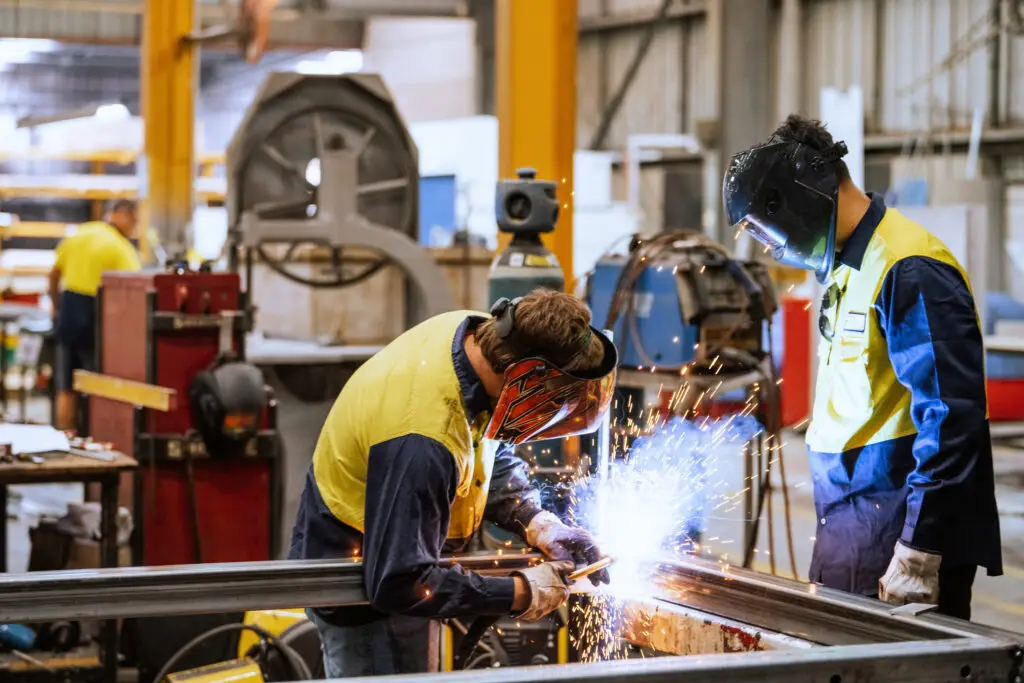
This occupation is found across a wide range of industries, including areospace, construction, defence, mining, marine and structural engineering. You could work in a range of settings such as fabrication shops, assembly yards, construction and building sites, factories and operational facilities requiring maintenance or upgrade.
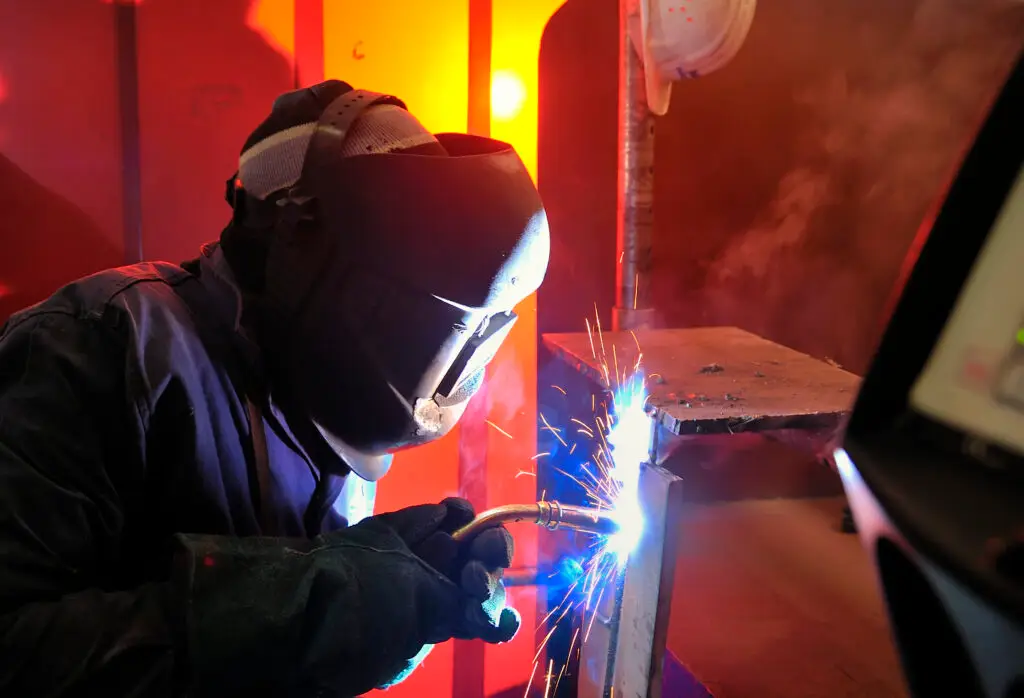
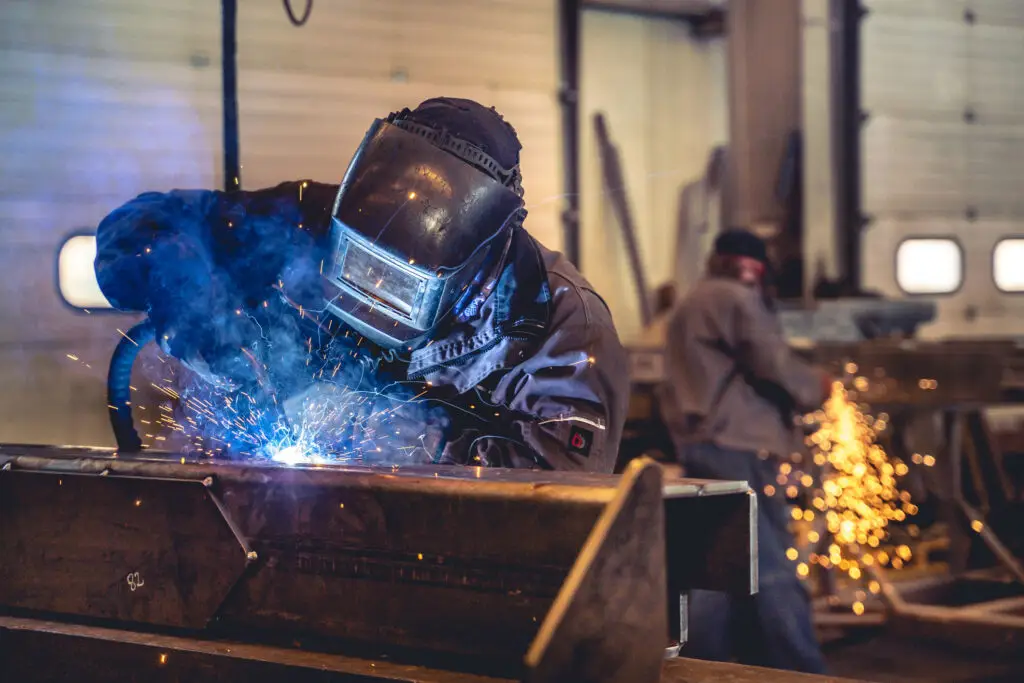
On this apprenticeship, the main purpose of your role will be to produce welds using manual and machanised arc weling processes to sector standards. Each welding process requires different welding equipment, assemblies, controls, skills and techniques, and represents a separate production process.
In your daily work, you’ll interact with a wide range of other professionals, including Platers, Metal Fabricators, Erectors, Riggers, Stores Operatives, Supervisors, Engineers, Inspectors, Non-Destructive Technicians and Quality personnel. You may be required to work shifts or in flexible work patterns.
As a HRC student, you’ll also receive excellent support from our tutors, pastoral care, guidance from assessors, access facilities and benefit from our strong employer links.
What will I learn?
You will learn to manually weld plate and structural components to high standards of quality.
This will involve fabrication, construction or repair of fabricated plate assemblies, extrusions and structural components (e.g. Channel, H-Beams, I-Beams etc.) used often used to fabricate larger components and assemblies.
You will weld to internationally recognised quality standards using more than one manual arc welding process from Tungsten Inert Gas (TIG), Plasma Arc Welding (PAW), Manual Metal Arc (MMA), Metal Inert Gas (MIG)/Metal Active Gas (MAG) and Flux Cored Arc Welding (FCAW) on more than one material group from Carbon Steel, Low Alloy Steel, High Alloy Ferritic/Martensitic Steel, Austenitic Stainless Steel, Nickel & Nickel Alloys, Aluminium & Aluminium alloys, Titanium & Titanium Alloys, Copper & Copper Alloys.
For example, a Plate Welder might use Manual Metal Arc (MMA) and Flux Cored Arc Welding (FCAW) to join both Carbon Steel and Low Alloy Steel materials.
The occupation requires production of welds in plate and structural components covering three plate welding positions which must include Vertical (either upward or downward progression) and Overhead, and the three main joint configurations (Single or Double Sided Butt, Single or Double Sided T-Butt & Fillet).
Entry criteria
Prospective apprentices would typically have already achieved a GCSE (or Level 2 equivalent) at grade 4/C in English and Maths.
How will I be studying?
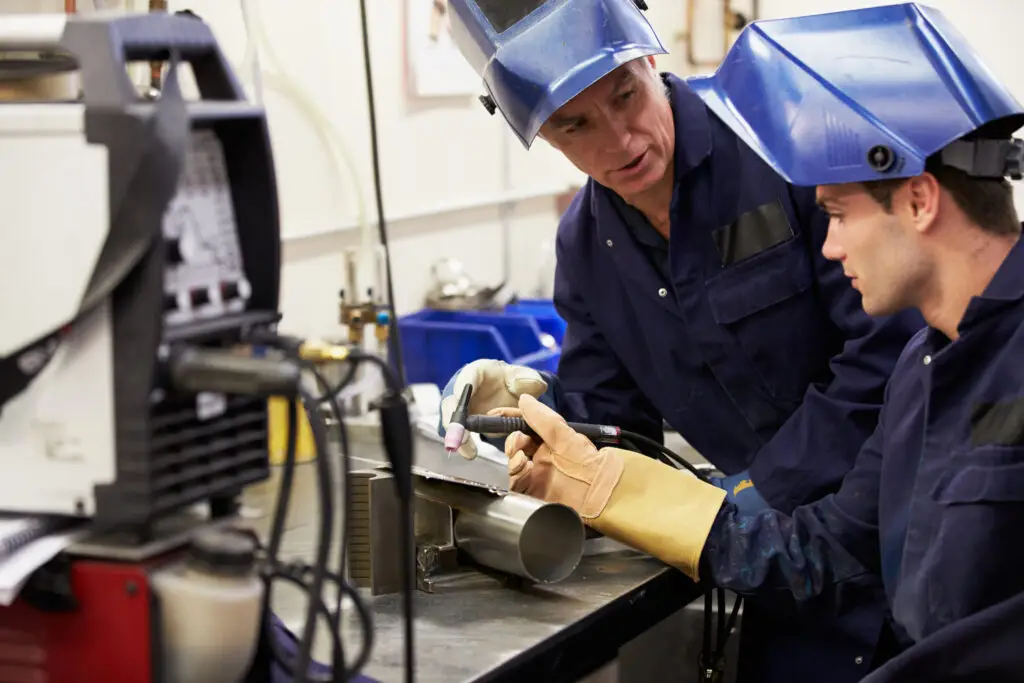
You’ll typically study through a blend of workshops and face-to-face sessions.
On campus, you’ll benefit from regular classes with an experienced college tutor.
How will I be assessed?
You’ll have a 3-month apprenticeship assessment period.
This will include a multiple-choice test, a practial assessment with questions, and an interview underpinned by a portfolio of evidence.
How many days per week will I be in college?
You will have monthly face-to-face sessions in college with an experienced tutor.
What can I do after this course?
Following this apprenticeship, you could progress on to a permenant position as a qualified Plate Welder, before senior or specialist roles as you gain experience. You could also pursue higher-level qualifications, specialist welding qualifications, or further engineering apprenticeships.
Course fees
This course is free to apprentices, as the cost is paid by your employer. Large companies can fund the course using their apprenticeship growth and skills levy. SMEs can access government funding to subsidise the cost by 95%, or 100% depending on the age of the apprentice.
Starting Your Welding Journey
An apprenticeship is a form of employment, so the application process is slightly different to a normal course. You apply directly to the employer, and there may be an interview, just like a normal job application.
When we advertise vacancies on behalf of employers, you can apply directly for these opportunities. Vacancies can fill quickly, so if there are none available, we ask that you register your interest. This allows us to match you with future opportunities and let you know about new vacancies as they arise.
You can also choose to contact our team if you’d like guidance or support with your application, but this is optional — the process works for both independent applicants and those who want assistance.
If you’re ready to start, you can browse our live welding vacancies and make your application. If you can’t find a vacancy, want to register your interest so that we can tell you about new vacancies, or want some support with your application, get in touch via telephone, email, or fill out our form below and we’ll help you begin the process.
Registering Your Interest
Here’s what you need to do:
Prefer to speak to someone?
Contact our team today.
Call – 01992 411 572
Email – apprenticeship@hrc.ac.uk