 Skip to content

Home » Study Areas » Apprenticeships » Electrical Installations Apprenticeships » Level 3 Installation and Maintenance Electrician Apprenticeship
Level 3 Installation and Maintenance Electrician Apprenticeship
Qualification
Duration
Location of Study
We have multiple start dates across each academic year, typically on a monthly basis. Following application we will discuss with you the next available start date. The duration of this apprenticeship can be reduced for applicants with existing electrical qualifications.
Electricians are found across the industrial, commercial, and residential construction, engineering and power industries, installing, maintaining and repairing electrical systems. You may work on the installation, initial verification and testing, commissioning, and maintenance of low voltage (up to and including 1000 V or AC 1500 V DC) electrical and electronic equipment. You can also work on the maintenance of electrical and electronic installations including automated production systems. This apprenticeship is a great way to get into a high-demand trade, with opportunities across many different sectors.
Once qualified, some electricians may choose to become self-employed contractors.
Every day, you’ll interact with:
• Customers – either the contracting company or the end user
• Team Leader/Area Manager as well as personnel responsible for materials storage and supply if they work in an organisation
• Workers in other construction trades who may be working on the same site
• Building materials suppliers, merchants and small business support
• An electrician will sometimes work within a team or supervise a small team and may often be accompanied an apprentice
You’ll be responsible for completing their own work to specification, with minimal if any supervision, ensuring you meet set deadlines. You may be solely responsible for company property such as tools and work vehicles for transporting materials such as company vans. You’ll know how to operate within the limits of your own competence and when and from whom to seek help when needed.
Key requirements for successful electricians include professionalism, high regard for client satisfaction and safety prioritisation throughout the job from inception, proposing solutions including design, providing quotations, undertaking work, commissioning and handover.
What will I learn?
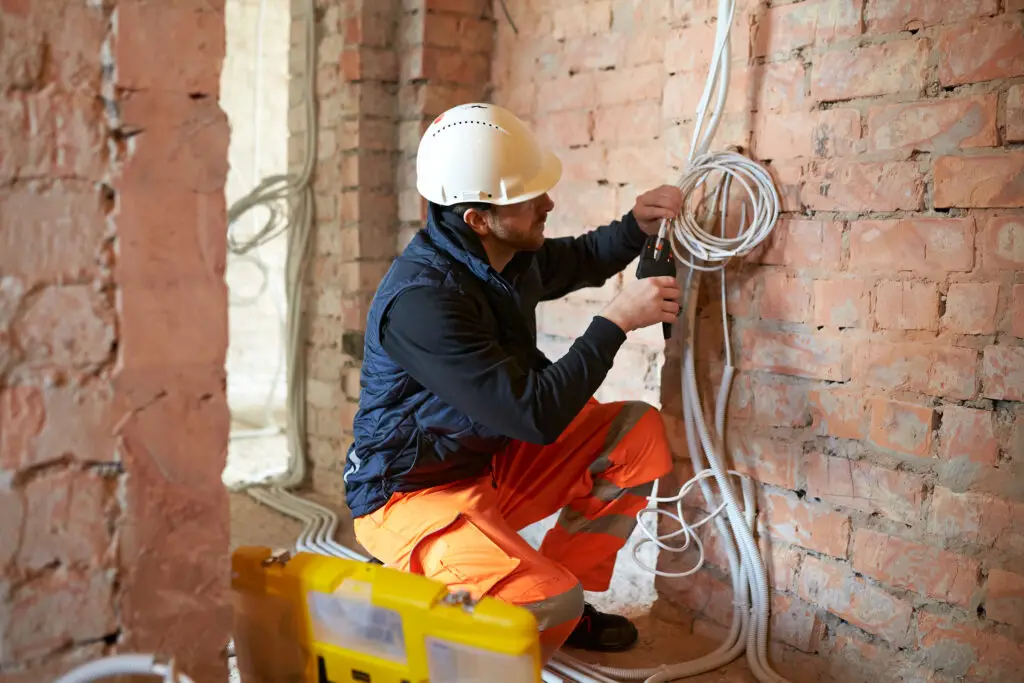
You’ll learn how to install, maintain and repair electrical systems in industrial, commercial and residential environments including communal areas.
You’ll use engineering knowledge and understanding to apply technical and practical skills – contributing to the design, development, construction, commissioning, operation and maintenance of products, equipment, processes, of electric systems or services.
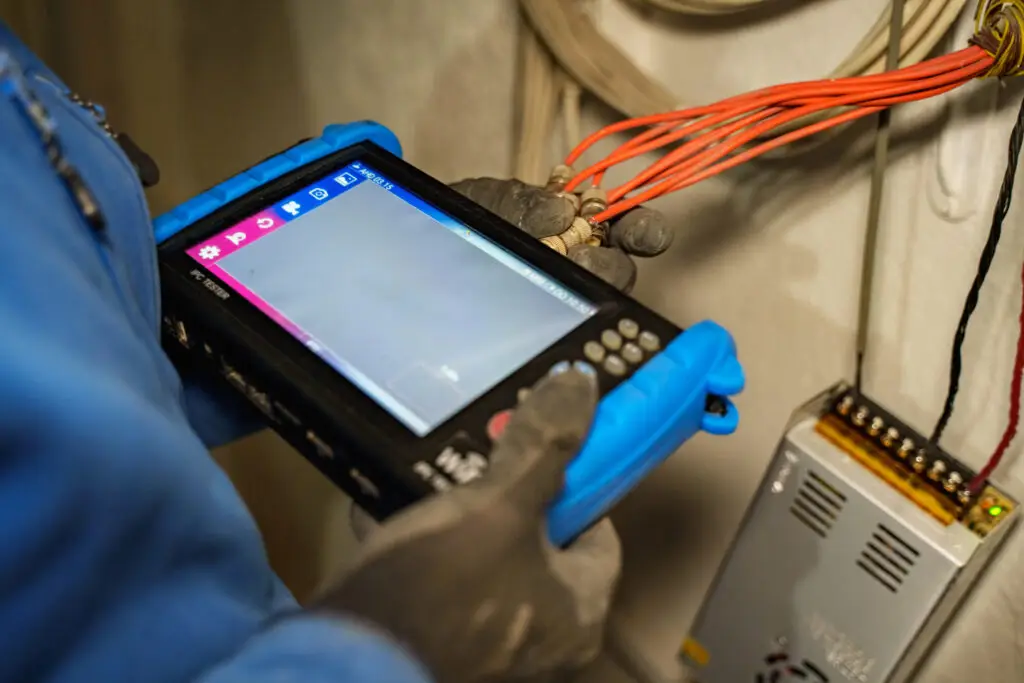
Electrical equipment and systems may include switchboards, motors, cables, fuses, thermal relays, protective devices, heating, lighting, air conditioning and metering equipment as well as property and life safety installations and renewable energy technologies plus the installation and maintenance of electrical connections of new and emerging technologies supporting low carbon targets. The new technologies will include enhanced connectivity, green and renewable technologies including heating and cooling technologies, using where appropriate, Modern Methods of Construction including offsite and prefabricated components.
You may work in both indoor and outdoor settings on a range of electrical equipment and systems. You’ll learn how to work on your own proficiently, without immediate supervision, in the most efficient and economical manner.
You may contribute to the design of electrical systems. You might set out jobs from drawings and specifications and requisition the necessary installation materials.
Electrical safety is an important area of any Electricians’ work. On completion of your work the electrical installation must be safe to use.
You’ll ensure compliance with statutory and non-statutory requirements including the Health and Safety at Work Act and the Electricity at Work Regulations (EAWR), the Waste Electrical and Electronic Equipment Regulations (WEEE), and Working at Height Regulations, BS 7671 and related codes of practice and industry guidance including but not limited to the Building Safety Act.
Entry criteria
Prospective apprentices would ideally have already achieved a GCSE (or Level 2 equivalent) at grade 4/C in English and Maths.
How will I be studying?
This apprenticeship is a blend of workshops with weekly face-to-face sessions (unless on the NVQ-only pathway).
How will I be assessed?
You’ll have a 6-month apprenticeship assessment period, known as an End-Point Assessment (EPA).
This will include behavioural validation from your employer, an observation with questions, and an open-book multiple choice test.
How many days per week will I be in college?
This course is typically delivered via blended workshops with monthly face-to-face college sessions.
What can I do after this course?
On successful completion of this course, you can progress to qualified electrician, design and maintenance roles, or advanced electrical qualifications.
Course fees
This course is free to apprentices, as the cost is paid by your employer. Large companies can fund the course using their apprenticeship growth and skills levy. SMEs can access government funding to subsidise the cost by 95%, or 100% depending on the age of the apprentice.

Starting Your Electrical Apprenticeship Journey
An apprenticeship is a form of employment, so the application process is slightly different to a normal course. You apply directly to the employer, and there may be an interview, just like a normal job application.
When we advertise vacancies on behalf of employers, you can apply directly for these opportunities. Vacancies can fill quickly, so if there are none available, we ask that you register your interest. This allows us to match you with future opportunities and let you know about new vacancies as they arise.
You can also choose to contact our team if you’d like guidance or support with your application, but this is optional — the process works for both independent applicants and those who want assistance.
If you’re ready to start, you can browse our live electrical vacancies and make your application. If you can’t find a vacancy, want to register your interest so that we can tell you about new vacancies, or want some support with your application, get in touch via telephone, email, or fill out our form below and we’ll help you begin the process.
Registering Your Interest
Here’s what you need to do:
Prefer to speak to someone?
Contact our team today.
Call – 01992 411 572
Email – apprenticeship@hrc.ac.uk